
our services
our services

This process involves the systematic combination of individual components into complete products or subassemblies. It can include both mechanical and electrical integration, functional testing, quality inspection, and sometimes software flashing or calibration. Assembly requires detailed documentation like work instructions, torque specifications, and often utilizes jigs, fixtures, and error-proofing techniques (poka-yoke). Integration ensures that disparate components function cohesively as a single product or system.

Contract manufacturing is a form of outsourcing where a hiring firm (often called the "OEM" or original equipment manufacturer) delegates the manufacturing process to a specialized external supplier. The contract manufacturer (CM) produces goods to the OEM’s specifications, often handling everything from sourcing raw materials and components to final assembly, testing, packaging, and logistics.

Extrusion is a continuous process where heated material—typically aluminum or thermoplastic—is forced through a die to create profiles with uniform cross-sections. This is commonly used for structural frames, tubing, and channels.
• Die Casting involves injecting molten metal (often aluminum, magnesium, or zinc) into a steel mold under high pressure. It is suitable for high-volume production of intricate, dimensionally stable metal parts with excellent surface finishes. Die casting can reduce post-processing by minimizing porosity and enabling near-net-shape parts.
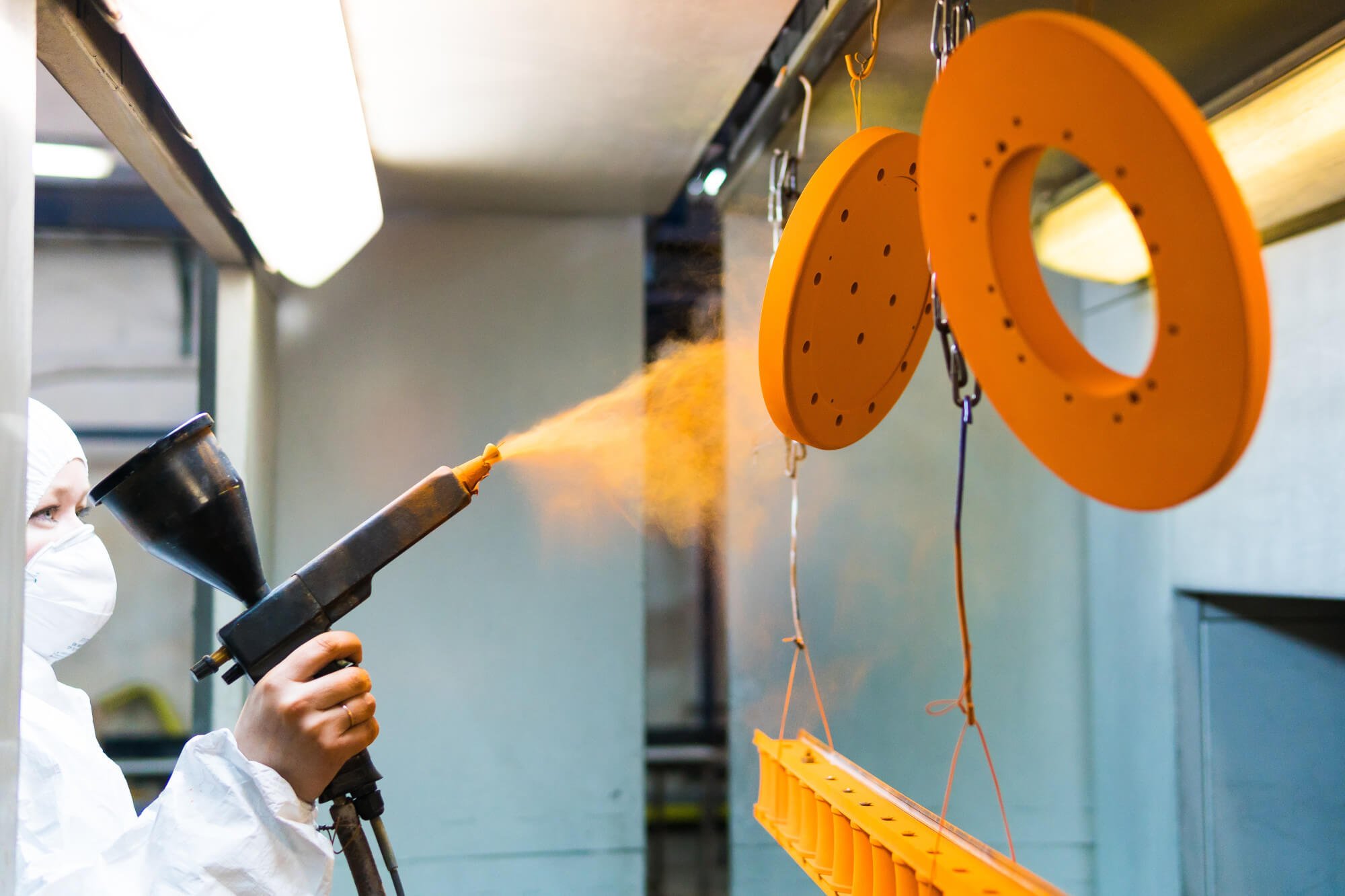
Powder coating electrostatically applies dry resin powder to a grounded metal surface, which is then heat-cured to form a hard, durable finish. It resists corrosion, chipping, scratching, and fading far better than liquid paint. Ideal for metal enclosures, furniture, automotive parts, and machinery. The process includes cleaning (degreasing, phosphate treatment), application, and curing in a high-temperature oven. It is environmentally friendly, with minimal VOCs and overspray that can be reclaimed and reused.
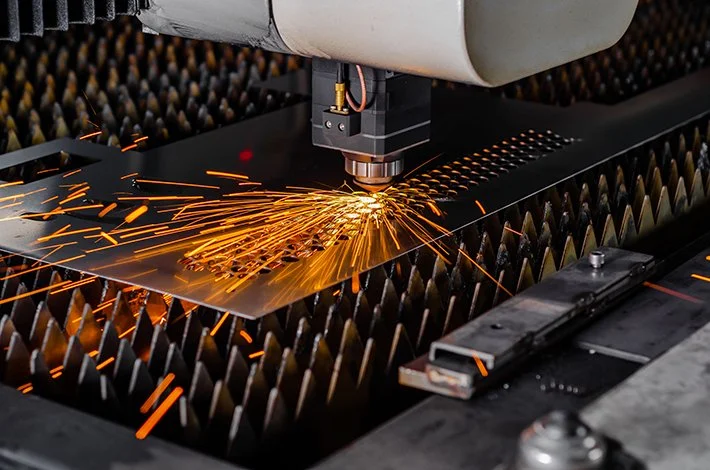
Our precision laser cutting services deliver accurate, clean, and consistent cuts for a wide range of materials, including steel, aluminum, and stainless steel. Using advanced laser technology, we produce intricate designs and complex parts with minimal waste and exceptional edge quality — ideal for both prototyping and large-scale production.
A punch press uses mechanical or hydraulic force to drive a punch into a die, cutting holes or shapes in sheet metal. Tooling can be single-station or turret-style for fast tool changes. This process is suited for high-speed stamping, perforation, embossing, or blanking in thin to medium-gauge metals. Automation capabilities include coil feeding and part ejection for high-throughput production.

• Logistics oversees the end-to-end flow of materials, from raw stock intake to finished goods distribution. It involves inventory control, warehouse management, shipping, receiving, and supplier coordination.
• Kanban is a lean scheduling system that signals production or replenishment needs using visual cues (cards, bins, or digital systems). It reduces overproduction and promotes just-in-time delivery, enhancing throughput and minimizing inventory waste. Kanban works well in repetitive manufacturing environments and supports continuous improvement (Kaizen).

An umbrella term for the processes used to cut, form, and assemble thin-gauge metal sheets into functional parts and enclosures. Includes laser cutting, punching, bending (press brake), welding, hardware insertion, and finishing (powder coating or painting). Sheet metal fabrication supports both prototyping and full-scale production across industries like aerospace, electronics, automotive, and HVAC. Precision and repeatability are achieved through digital design (CAD/CAM), nesting software, and lean workflows.
• MIG (Metal Inert Gas) welding feeds a consumable wire electrode and shielding gas (typically argon/CO₂ mix) to join materials quickly. It’s ideal for production welds in carbon steel, stainless steel, and aluminum, offering high deposition rates.
• TIG (Tungsten Inert Gas) welding uses a non-consumable tungsten electrode and often requires a filler rod. It produces cleaner, more precise welds with superior aesthetics and control, often used on critical joints in aerospace, medical, and high-end fabrication.

Engineering spans the entire product development lifecycle—from conceptual design and prototyping to final production-ready documentation. It involves CAD modeling, FEA (Finite Element Analysis), DFM (Design for Manufacturability), and sometimes DFA (Design for Assembly). Engineers evaluate material properties, stress tolerances, thermal performance, and manufacturing constraints. The goal is to optimize functionality, cost, and manufacturability while ensuring regulatory and safety compliance.

An electrically conductive gas (ionized by a high-frequency arc) is used to melt and blow away material from a metal workpiece. Plasma cutting excels at slicing through thick steel and aluminum at high speeds, often using CNC tables for accuracy. It’s more cost-effective than laser for heavier gauges but has wider kerfs and a rougher edge finish. Common in structural fabrication and repair.

This encompasses manual or semi-automated processes for material removal and shaping. Techniques like turning, facing, milling, slotting, drilling, and threading are executed on manual lathes, mills, or drill presses. General machining is ideal for low-volume or prototype work, or when flexibility and operator control are preferred. It allows for quick adjustments and setup changes, especially useful for unique or irregular parts that may not justify CNC programming.
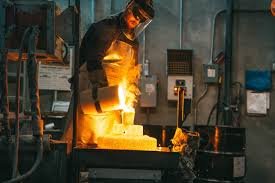
Our precision sheet metal manufacturing services combine advanced engineering with meticulous craftsmanship to deliver exceptional results. From concept to completion, we fabricate components that meet the tightest tolerances and the highest industry standards. Every project benefits from our investment in cutting-edge machinery, skilled technicians, and a deep commitment to accuracy and consistency — ensuring your products perform flawlessly and look refined.

CNC (Computer Numerical Control) machining utilizes pre-programmed software to guide the movement of cutting tools in mills, lathes, and routers. This highly automated process ensures consistent dimensional accuracy and repeatability, ideal for tight-tolerance parts. Operations include milling, turning, drilling, tapping, and contouring, applicable to metals, plastics, and composites. Advanced setups may include 5-axis machining for complex geometries, automated tool changers, and in-process inspection for quality control.
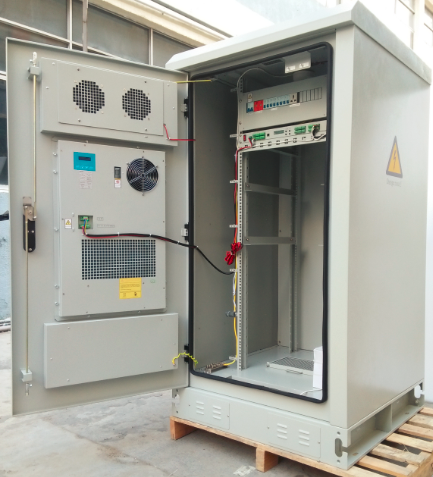
We specialize in designing and manufacturing high-quality telecom enclosures built for durability, protection, and performance. Our enclosures safeguard sensitive telecommunications equipment against harsh environments, ensuring reliable connectivity and long-term operation. From standard models to fully customized solutions, we deliver precision-engineered products that meet industry standards and client specifications.

Industrial painting applies protective and decorative coatings using spray, dip, or roll-on techniques. It includes surface preparation (e.g., degreasing, sanding, or blasting), priming, color coating, and curing. Paint types include epoxy, urethane, acrylic, and enamel—chosen based on durability, UV resistance, and chemical exposure. Controlled environments (e.g., paint booths) ensure consistent application and VOC compliance.